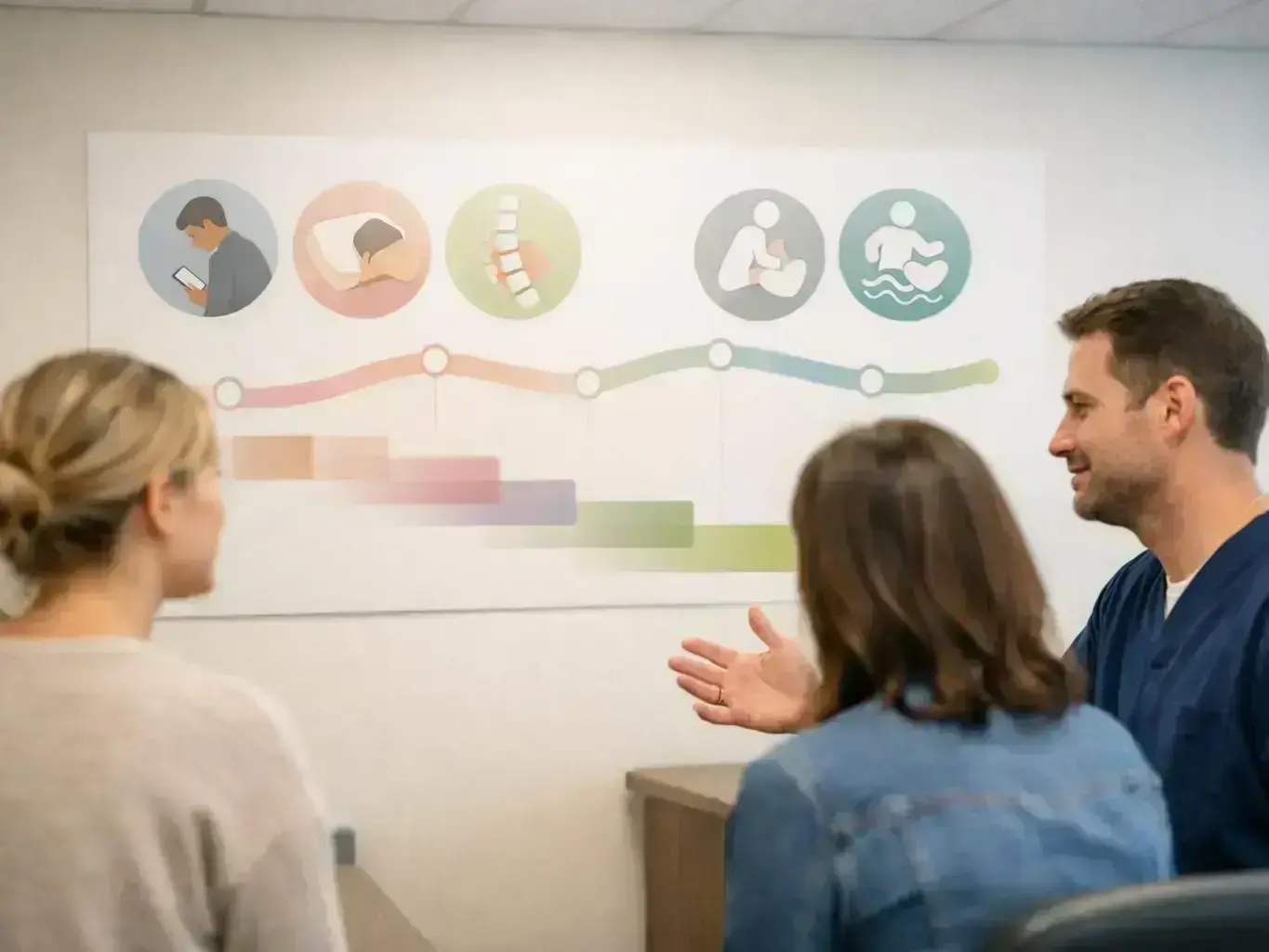
Understanding Intersegmental Traction
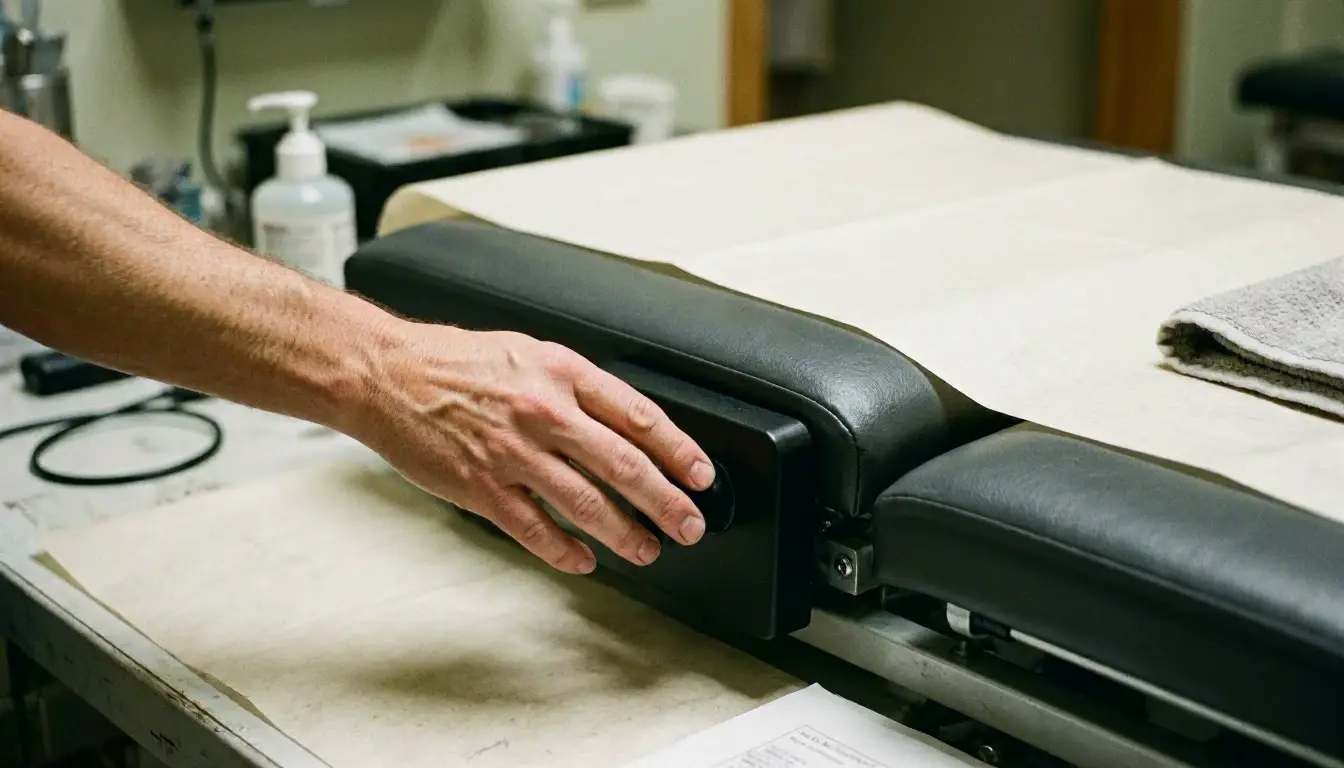
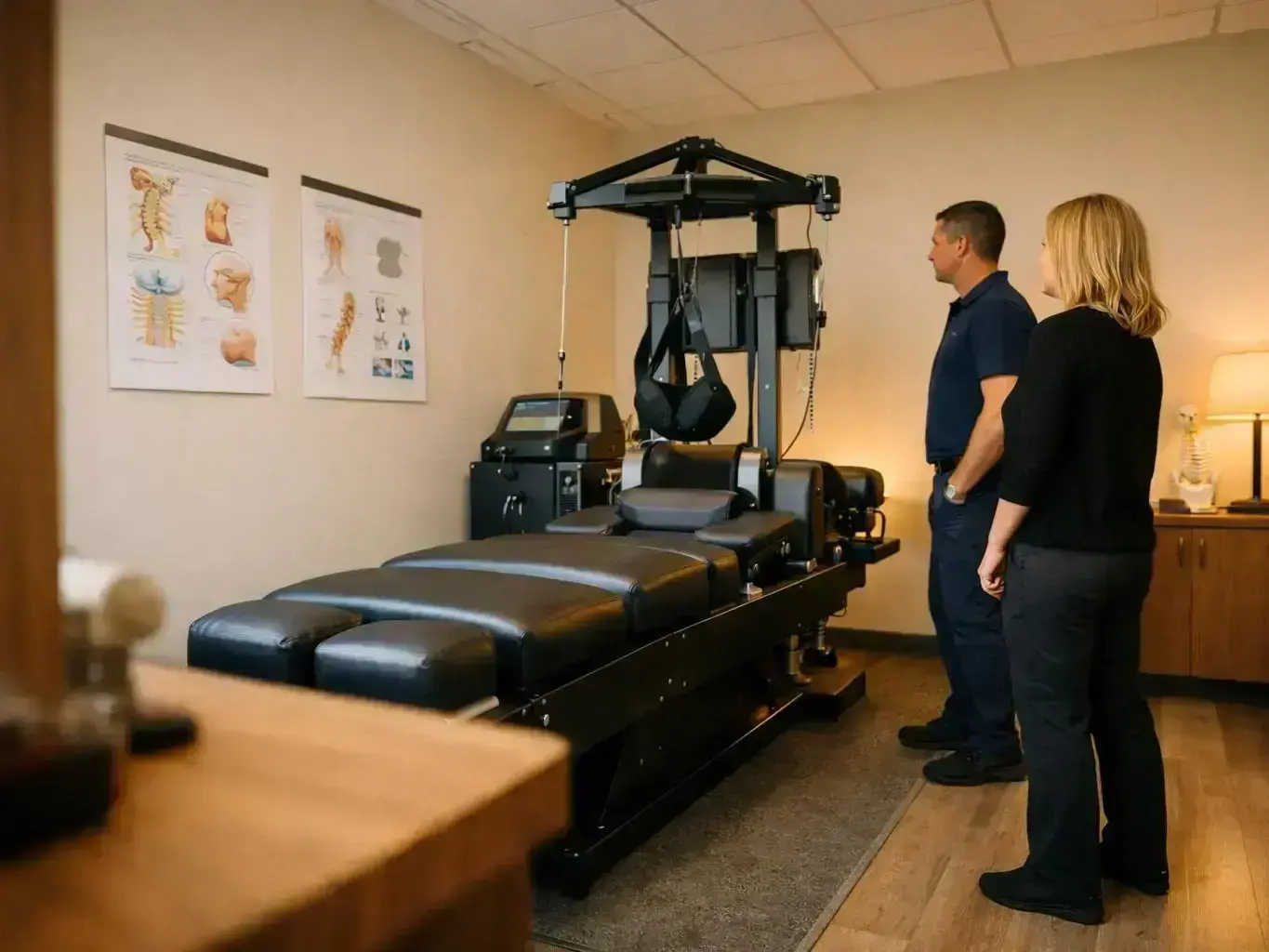
Intersegmental Traction helps your spine. It's a common chiropractic (back doctor) treatment. It uses a special table with rollers.
Related glossary terms: Chiropractic Table, Spinal Manipulation, Decompression Therapy.
Rollers move along your spine. They push gently on each bone. You don't have to do anything.
This helps stretch your spine. It takes pressure off your discs (soft pads between bones). It also helps your joints move better.
Many people find it relaxing. They don't need to help or move.
The goal is to help your spine move normally. Bad posture, injuries. Or stress can make bones stiff. They can also move out of place.
Stiff bones can hurt. They can make you less flexible. They can even bother your nerves.
This treatment helps loosen your spine. It eases tension and helps blood flow. It helps your body heal itself.
Doctors often suggest it for long-term back pain. It helps people with slipped discs (bulging pads). It also helps with spine wear-and-tear.
How Intersegmental Traction Works?
You lie on your back on a traction table. The table has rollers under it. They move along your spine in a set way.
The rollers lift each bone a little. They make space between the joints. This helps pump good stuff into your discs.
Discs are like cushions. They stop bones from rubbing together. They also help absorb shocks.
The doctor can change the pressure. They make sure it feels okay for you. Each session lasts 10 to 20 minutes.
The rollers can move fast or slow. They can follow different patterns. Some tables also have heat or vibration.
You don't have to do anything. But many people feel less stiff after one try.
Why Intersegmental Traction Matters?
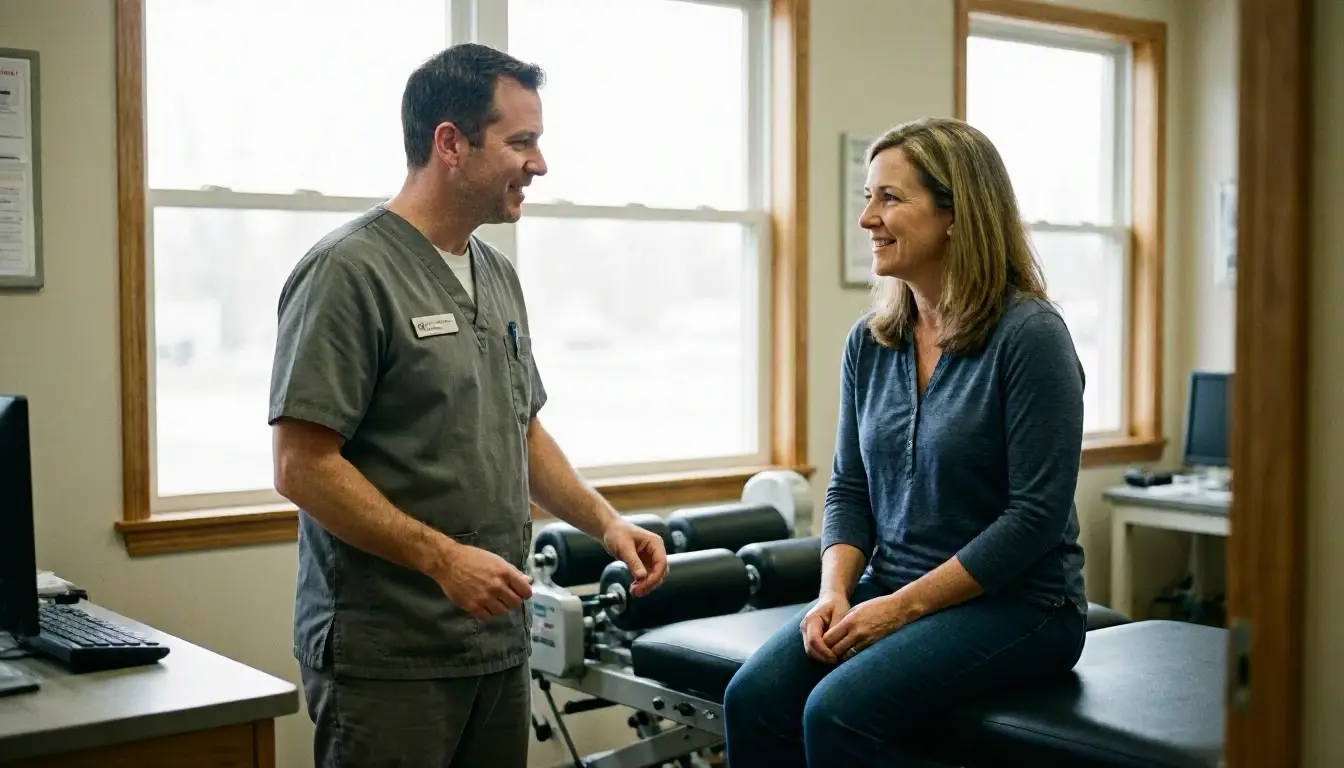
This treatment helps keep your spine healthy. It's great for people with pain or less movement. Your spine should move freely.
But sitting, lifting. Or doing the same thing can make it stiff. When bones get stiff, muscles and discs work too hard.
This can cause swelling. It can wear down discs. It can squeeze nerves.
This treatment helps bones move right. It stops these problems. It keeps your spine working well.
It also helps discs stay wet. Discs don't have blood. They get food from movement.
The rollers stretch and squeeze gently. This helps discs soak up nutrients. It keeps them strong.
This is key for people with worn discs. It's also good for those healing from injuries.
Using this often can help other treatments work better. It works with spine fixes or exercises for full care.
When Intersegmental Traction Matters Most?
This treatment helps people with stiff backs. It helps those with less spine movement. It also helps with long-term back pain.
Doctors suggest it for slipped discs. It helps with sciatica (nerve pain). It also helps with spine arthritis.
It eases nerve pressure. It makes people more comfortable. It's good for healing after injuries too.
It helps after car accidents or sports hurts. It doesn't stress your spine.
It can also stop problems before they start. It's good for people who sit a lot. Sitting too long can make your spine stiff.
It can also cause bad posture. Regular sessions help keep your spine flexible. They lower the chance of future pain.
Chiropractors may add this to a bigger plan. They might mix it with exercises or stretches. This helps you get the best results.