Glossary

What is Disc Herniation?

Disc Herniation is a spinal condition where the soft inner gel of a spinal disc leaks through a tear in the tougher outer layer, often pressing on nearby nerves. This can cause pain, numbness. Or weakness in the back, legs. Or arms, depending on the disc’s location along the spine.

Reviewed by Dr. Harry W. Brown, D.C.Sources reviewed: American Academy of Orthopaedic Surgeons, Mayo Clinic

Quick Facts About Disc Herniation

Category

Spinal injury

Used for

Diagnosing nerve-related back or limb pain

Common confusion

Often mistaken for muscle strain or arthritis

Also called

Herniated Disc, Slipped Disc

Often discussed with

Chiropractic Consultation and Diagnosis, Work Injury Treatment

Key Takeaways About Disc Herniation

Understanding Disc Herniation
Disc Herniation in Chiropractor—McDonough

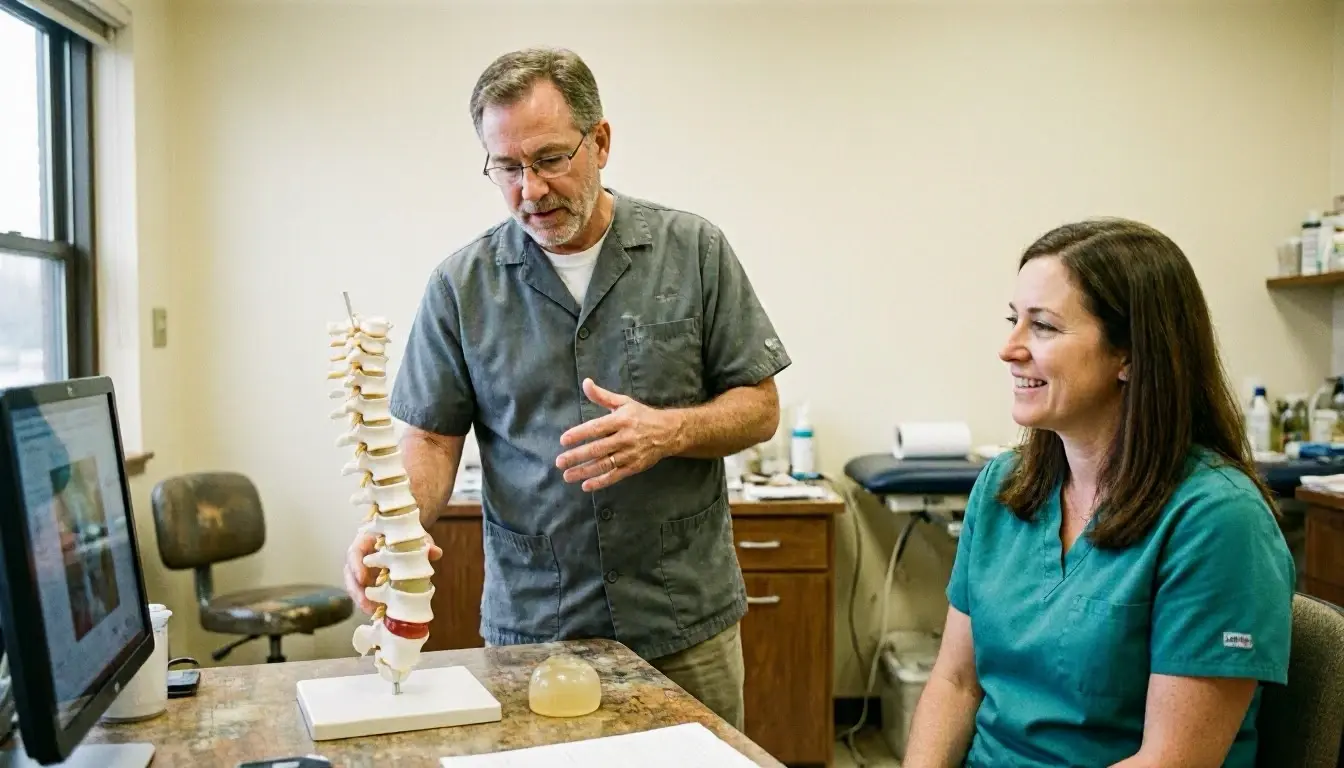
Disc herniation happens when a disc in your spine gets hurt. These discs are like cushions between your back bones.

Related glossary terms: Spinal Alignment, Chiropractic Care, Back Pain.

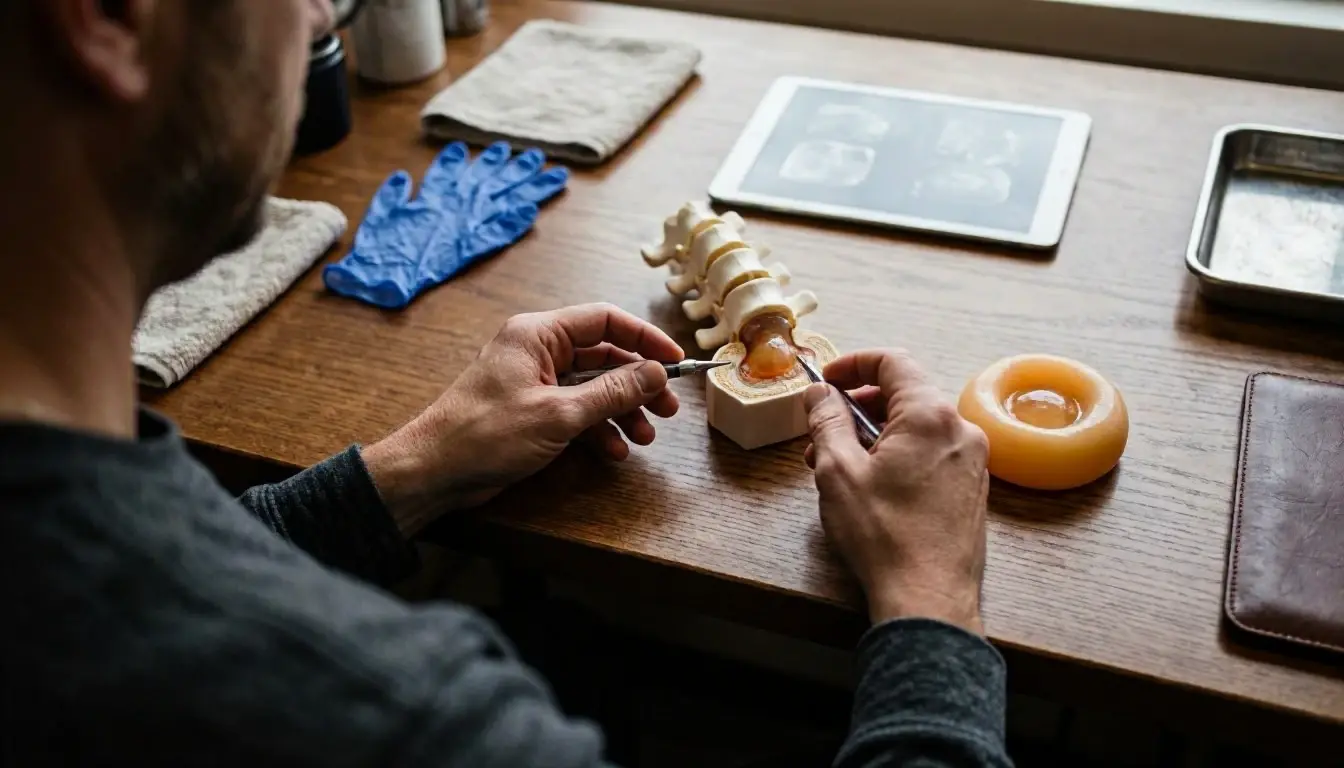
Each disc has a tough outer layer. It also has a soft center that feels like jelly. When the outer layer tears, the jelly can push out. This is called a herniation.

The bulge can press on nerves near your spine. This may cause pain, tingling. Or weak muscles.

Disc herniation can happen anywhere in your spine. It often happens in the lower back. This area is called the lumbar spine.

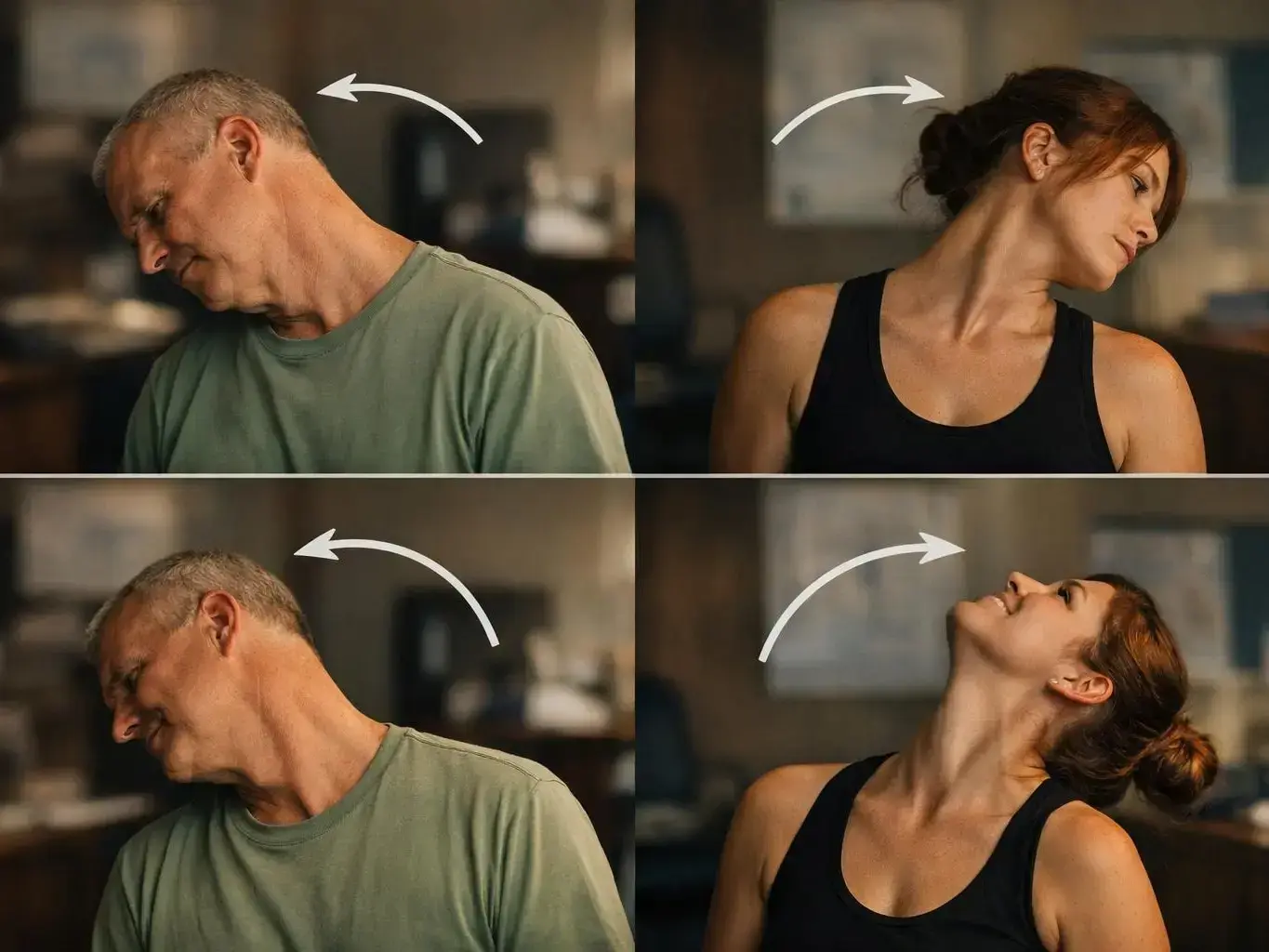
It can also happen in your neck. This area is called the cervical spine. The lower back carries most of your weight. It helps you bend and lift.

That's why it gets hurt more often. Herniations in your neck may cause pain in your shoulders, arms. Or hands. Herniations in your lower back usually hurt your buttocks, legs. Or feet.

How Disc Herniation Works?

Your spine has 24 bones called vertebrae. They stack on top of each other. A disc sits between each pair.

These discs act like shock absorbers. They help your spine bend and twist. When a disc herniates, the jelly leaks out.

This can bother the nerves near your spine. Nerves send messages between your brain and body. When nerves get pressed, the messages can get mixed up.

This causes symptoms. Doctors often use MRI or CT scans to find herniated discs. These tests show where the problem is.

They also show how bad it is. Doctors will check your body and ask about your health. This helps them match your symptoms to the problem.

A herniated disc in your lower back may cause sciatica. This is a sharp pain that goes down your leg. A herniated disc in your neck may cause pain or weakness in your arm.

Why Disc Herniation Matters?

Disc herniation can make daily life hard. It may cause pain and make it hard to move. You might not be able to do simple tasks.

If not treated, it can cause long-term pain. It may also hurt your nerves. This can make your muscles weak or hard to control.

Finding it early helps a lot. Treatment can ease pain and stop more damage. You might not even need surgery.

Most herniated discs heal on their own. Rest, physical therapy. Or chiropractic care can help. These treatments reduce swelling.

They help your spine line up better. They also make the muscles that support your spine stronger. Surgery is rarely needed.

Doctors may suggest it if symptoms don't get better. It's also an option if nerves are badly pressed.

When Disc Herniation Matters Most?

Disc herniation matters when it affects your daily life. It can make work, sleep. Or activities hard.

For example, leg pain from a herniated disc can make walking hard. It can make standing or sitting for long periods painful.

Weak arms from a neck herniation can make lifting hard. It can also make small tasks like writing tough. Finding help early keeps small problems from getting worse.

Some jobs make disc herniation more likely. Jobs with heavy lifting or lots of bending are risky. So are jobs where you sit a lot.

Athletes, construction workers. And office workers are at higher risk. Aging also weakens your discs. This makes herniations more common as you get older.

Good posture helps protect your discs. So does lifting things the right way. Staying active also lowers your risk.

How to Evaluate Disc Herniation?

Related Concepts Compared

Disc Herniation vs. Bulging Disc

A bulging disc occurs when the disc extends beyond its normal boundary but the outer layer remains intact. While a herniated disc involves a tear and leakage of the inner material.

Disc Herniation vs. Sciatica

Sciatica is a symptom of nerve irritation, often caused by a lumbar disc herniation. But it can also result from other spinal conditions like spinal stenosis.

Disc Herniation vs. Degenerative Disc Disease

Degenerative disc disease involves the natural wear and tear of spinal discs over time. While disc herniation is typically caused by a specific injury or sudden stress.

Expert Note

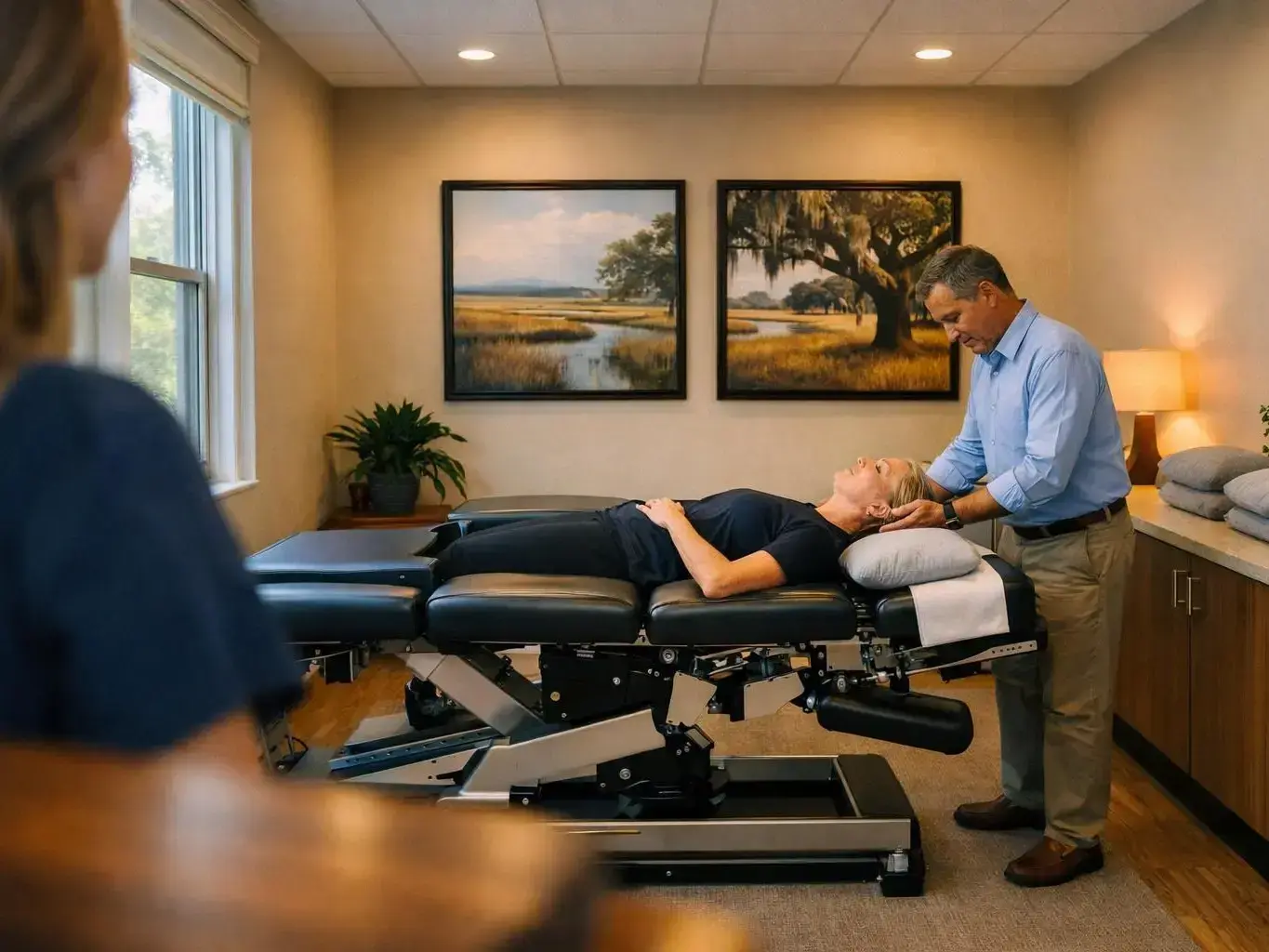
Disc herniations often heal without surgery. But the key is reducing inflammation and improving spinal mechanics. Gentle chiropractic adjustments and targeted exercises can help restore function and alleviate nerve pressure.

Common Mistakes or Myths About Disc Herniation

  • Assuming all back pain is caused by a herniated disc, when muscle strain or arthritis may be the real issue.
  • Ignoring symptoms like numbness or weakness, which may signal nerve involvement requiring prompt care.
  • Believing surgery is the only treatment, when most disc herniations improve with non-surgical methods.
  • Continuing heavy lifting or twisting motions after injury, which can worsen the herniation.

Disc Herniation in Practice: A Real-World Example

A warehouse worker lifts a heavy box and feels a sharp pain in his lower back that shoots down his leg. Over the next few days, he notices numbness in his foot and struggles to stand for long periods. An MRI reveals a herniated disc in his lumbar spine pressing on the sciatic nerve.

Sources & Further Reading on Disc Herniation

Related Services

Related Terms

Spinal Alignment

Spinal Alignment is the proper positioning of the vertebrae in the spine, ensuring they're correctly stacked and balanced. This alignment supports healthy posture, reduces strain on muscles and nerves. And allows the body to function efficiently. Poor alignment can lead to pain, stiffness.

Chiropractic Care

Chiropractic Care is a health care profession focused on diagnosing and treating musculoskeletal disorders, especially those related to the spine. Chiropractic Care uses hands-on spinal manipulation and other non-surgical techniques to improve alignment, reduce pain. And support the body’s natural ability to heal. It's often used for back pain, neck pain, headaches.

Back Pain

Back Pain is discomfort, soreness. Or stiffness felt anywhere along the spine, from the neck to the lower back. Back Pain can be sharp, dull, constant. Or occasional and may limit movement or daily activities. It often results from muscle strain, joint dysfunction, disc problems. Or poor posture, affecting people of all ages and lifestyles.

Decompression Therapy

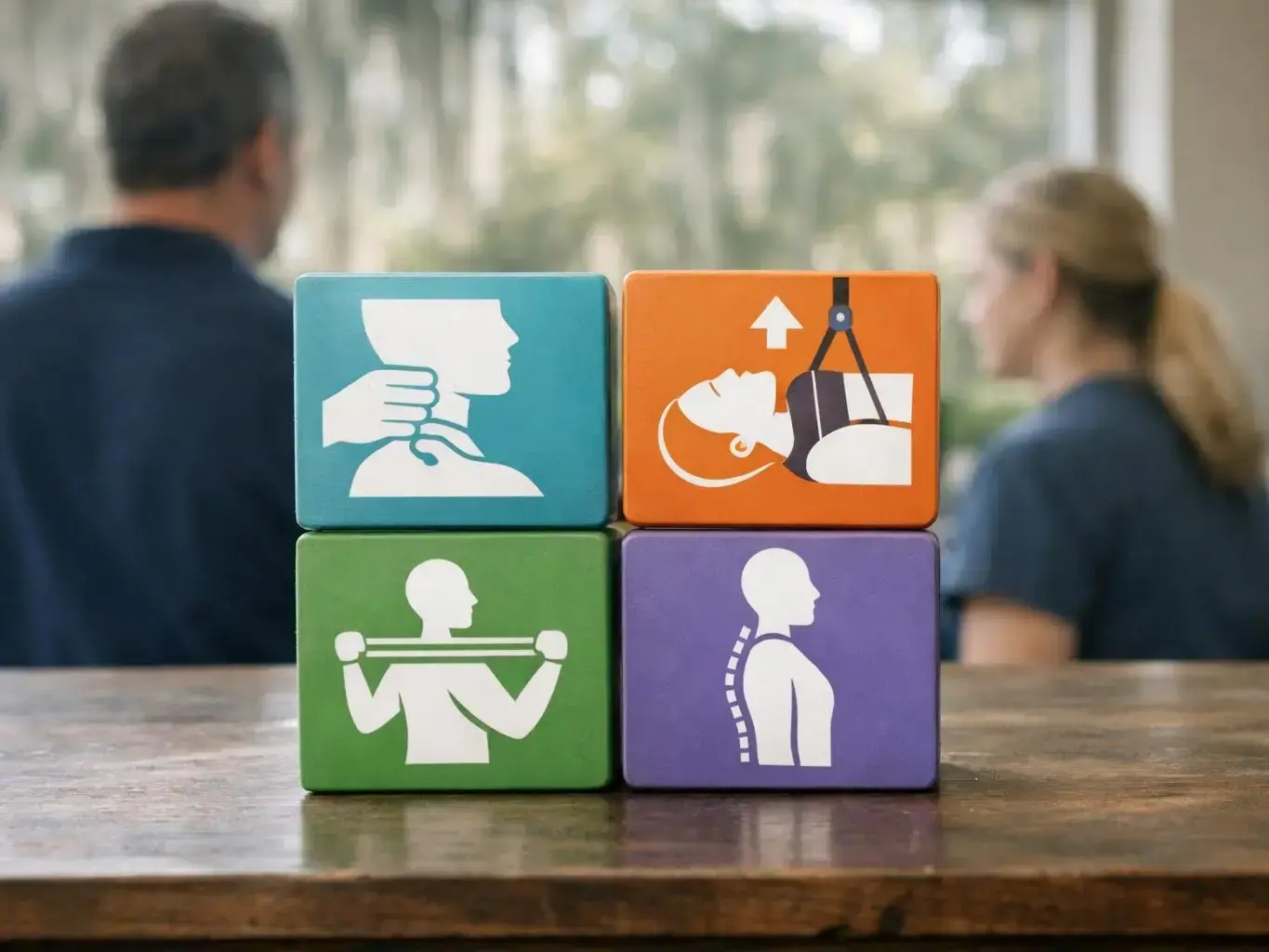
Decompression Therapy is a non-surgical treatment designed to relieve pressure on the spine and affected nerves. It uses controlled traction to gently stretch the spine, creating negative pressure within spinal discs. This process helps retract herniated or bulging discs, promoting movement of oxygen, water. And nutrient-rich fluids into the discs to aid healing.

Arrowhead Clinic Chiropractor

Have Questions About Disc Herniation?

Contact Arrowhead Clinic Chiropractor for practical guidance on Disc Herniation and related chiropractor work in McDonough.

+1 770-637-6261